





An Insurance CEO on Leading Boldly and Championing the Next Generation
For International Women’s Day, we invited Rekha Skantharaja, CEO of Balavant Insurance Group, to share reflections on her career, from assistant at a San Francisco brokerage to leading her own specialty insurance platform. She offered candid insights on the moments that shaped her path, the principles that guide her, and the advice she gives to women stepping into leadership today.
Her story is a reminder that the most defining moments rarely arrive on schedule and that sometimes, the most powerful move is to build the table yourself.
Here’s what Rekha shared about her career, leadership, and lessons learned…
1. Can you share your career journey, where you started and how you got to where you are today?
I started my insurance career in 2001 as an assistant at a brokerage firm in San Francisco, learning the business from the ground up. Early on, I worked in management liability and saw how insurance protects balance sheets, businesses and ultimately, the people in those organizations. Over the next decade I broadened my experience across brokerage and carrier environments, which ultimately prepared me to lead in the MGA space.
I joined Tangram in 2009, became President in 2013, and later stepped into the CEO role. Over the last several years, I have focused on scaling specialty programs while building a culture that is high accountability, inclusivity, and performance driven. More recently, I launched Balavant Insurance Group to support entrepreneurial underwriting teams with capital, carrier relationships, shared services, and modern technology so they can build enduring specialty businesses without compromising underwriting discipline.
2. What key moments or decisions shaped your path as a leader?
Three decisions shaped me the most.
First, I said yes to opportunities that stretched me before I felt fully ready, and I stayed curious and coached while I worked hard (and fast) to close the gaps.
Second, I committed early to building culture intentionally, because I have seen that a great team and high trust environment outperform almost anything else.
Third, I chose to put real responsibility in the hands of talented people who had historically been overlooked, including women and underrepresented leaders, and to back that commitment with roles that carry real influence, not symbolic titles.
3. Were there any pivotal moments that changed the direction of your career?
A pivotal moment was being trusted with leadership early in my Tangram journey. It was a reminder that leadership is often about potential and character, not perfection.
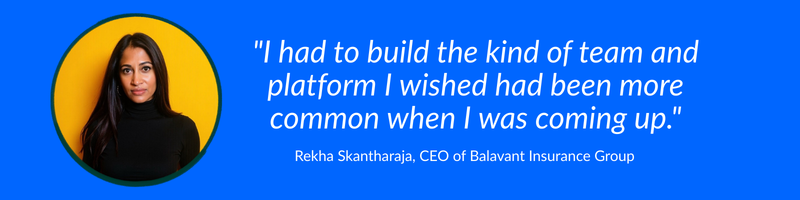
Another turning point was realizing that if I wanted to see change in our industry, I could not wait for permission or perfect conditions. I had to build the kind of team and platform I wished had been more common when I was coming up. There have been a number of potential acquirers for Tangram over the years – but it’s been so much more rewarding creating our own destiny.
4. What challenges have you faced as a woman in your industry, and how did you navigate them?
Insurance can be traditional, and I have led in environments where leadership did not look like me. There is real pressure, especially early on, to prove you belong. I learned quickly that I could not win by trying to fit a narrow mold.
I navigated those moments by focusing on results, building credibility through consistency, and leading in a way that was direct, values based, and “very” human. I also learned to treat inclusion as a business strategy, not a slogan, by placing diverse talent in the seats that run strategy, underwriting, finance, and P&L ownership.
5. Was there a moment when someone opened a door for you that changed everything?
Yes. Early in my career, people allowed me to be in the room, listen, learn, and take on work that expanded my range. The access was important. Later, I was given the chance to lead based on potential. Mike Heffernan, CEO of the Heffernan Group, could have sponsored a more experienced leader to lead the specialty business, but he chose me. That vote of confidence changed my trajectory, and it shaped how I think about sponsorship and creating opportunities for others.
6. What is your biggest takeaway from a particularly challenging experience?
Resilience is a learned skill. You can get into the proverbial fetal position (which I have wanted to many times) or you can tell yourself to “buck up buttercup”. Early on, I suffered in silence and flailed around in the dark trying to work through challenges by myself. Part of staying resilient is asking for help when you need it. The other part is making the tough calls and delivering the news with straightforwardness and authenticity.
7. Can you share an example of how giving your time, mentorship, or support has helped you grow as a leader?
One example is building leadership pipelines inside the businesses I have led, including creating spaces for my team to develop conscious leadership skills, be exposed to great minds in our industry, and step into bigger roles (often before they are “traditionally” ready).
Another example is how we think about development and feedback. I have pushed for a more frequent and practical rhythm of coaching and feedback so people can grow in real time, not just once a year. Giving people clarity, context, and room to lead has forced me to become more deliberate, more consistent, and more accountable as a leader.
8. Has someone’s generosity or guidance had a meaningful impact on your career?
I have benefited from leaders and peers who were generous with their time, counsel and candor – who taught me by bringing me into the work, and into the room, instead of keeping me on the sidelines. What I gained was confidence, faster pattern recognition, and connectivity to certain movers and shakers in our industry.
9. How do you give back, and what have you seen come full circle?
Inside the organization, I give back by sponsoring talent, creating opportunities for people to run meaningful work, and being direct about what great looks like so people can rise to it.
In the community, I support causes that serve children and families, and I have been especially committed to arts access for kids because the arts helped me build confidence and belonging early in life. The full circle moment is seeing young people find their voice through opportunity, break the generational cycle of poverty to create life on their terms.
10. What advice would you give to women looking to step into leadership roles?
Take the leap before you feel ready. Do not wait for a perfect moment or a perfect resume. Go after roles with real influence where you can run a business, build a team, and own outcomes. Stay close to the money – always.
Ask for what you want clearly and surround yourself with people who will tell you the truth. Then, once you are in the seat, make it matter.
11. What is one thing you wish you’d known earlier in your career?
I wish I hadn’t shape shifted to fit in. I wish I hadn’t laughed at offensive jokes because I was insecure and unsure how to react. I wish I had stuck up for myself and other women when put in overtly uncomfortable positions. I see more women setting boundaries and acting confidently – earlier. Not because they have a big title or a big office. Because they are innately aware of their value. And I am cheering them on, thinking, “Bravo!”
12. How can women support each other more effectively in the workplace?
Move beyond encouragement and networking. Make introductions to important people. Take the big jobs and crush it. Share valuable knowledge. Advocate for other women in rooms where decisions are made, and she’s not there.
Follow the money and stay close to it. Money is power, and power can be used to change the rules of the game, for the better.
Leadership grows when we share what we’ve learned. Proud to celebrate women who lead with purpose and create opportunity for others.

Related Posts